5 Ways That Solar Energy Benefits the Environment
It’s no secret that renewable energy from solar panels has a smaller environmental impact than energy produced from fossil fuels.
But exactly how is generating energy from solar panels better than burning fossil fuels?
In this article, we'll look at five distinct environmental benefits of replacing fossil fuels with solar energy.
Jump to a section:
Interested in home solar? Connect with an Energy Advisor to compare multiple quotes from trusted local installers.
 The term lifecycle emissions is important because it includes the carbon footprint of manufacturing solar panels (where most of its emissions come from) to decommissioning them at the end of their useful life.
Sam breaks it down even further in the video below, but here’s the upshot:
The term lifecycle emissions is important because it includes the carbon footprint of manufacturing solar panels (where most of its emissions come from) to decommissioning them at the end of their useful life.
Sam breaks it down even further in the video below, but here’s the upshot:
How do solar panels help the environment?
While solar panels are most often associated with producing very low-emission electricity, but by replacing fossil fuels they also benefit the environment in terms of land use, water use, noise pollution, and materials extraction (aka mining). Does solar energy have its downsides? Absolutely. Solar panels often contain trace amounts of heavy metals which can be harmful if not properly handled, sprawling solar farms can disrupt wildlife habitats, and solar panel recycling leaves a lot to be desired. But don't let perfect be the enemy of good. Solar energy has a much, much smaller impact on the environment than fossil fuels in at least five ways. Let's start with the environmental benefit that most people associate with solar panels: Reducing carbon emissions.Lifecycle emissions of solar vs fossil fuels
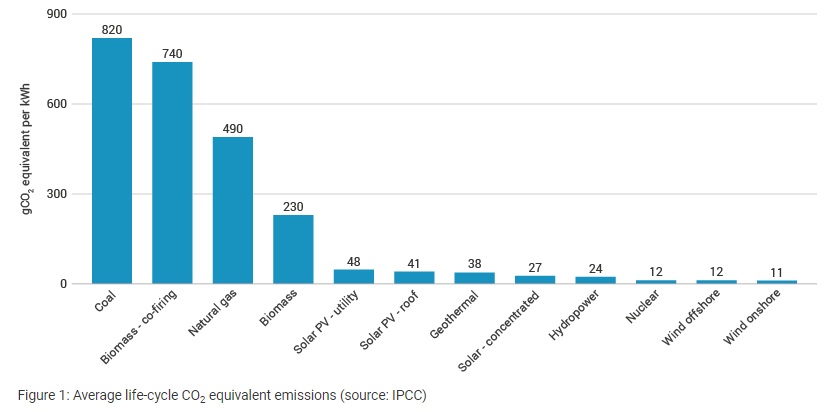
Perhaps the biggest environmental benefit of solar energy is its incredibly small carbon footprint. According to the International Panel on Climate Change (IPCC), the lifecycle emissions per kWh of electricity produced by rooftop solar are:- Around 12 times less than electricity generated by natural gas (perhaps closer to 20 times less after factoring in methane leaks from natural gas)
- Around 20 times less than electricity generated by coal
The term lifecycle emissions is important because it includes the carbon footprint of manufacturing solar panels (where most of its emissions come from) to decommissioning them at the end of their useful life.
Sam breaks it down even further in the video below, but here’s the upshot:
- Over 25 years, the average rooftop solar system offsets ~200,000 pounds of CO2 equivalent emissions (roughly the size of a blue whale)
- There are several realistic and meaningful opportunities to reduce the carbon footprint of solar panels further
Ready to see your numbers?
See your real solar price in 90 seconds
Enter your address — we'll show you the system, savings, and price for your exact roof.
Land use of solar panels
Land use may sound like an odd environmental benefit of solar energy, especially if you picture sprawling solar farms covering desert landscapes, but a 2022 study by the National Renewable Energy Lab (NREL) found that the land required for all of the solar, wind, and transmission infrastructure to decarbonize the US power sector by 2035 adds up to less than 1% of the available land in the continental US. In fact, it’s less than the area currently being used for railroads and less than half of the land dedicated to active oil and gas leases, as shown in the map below.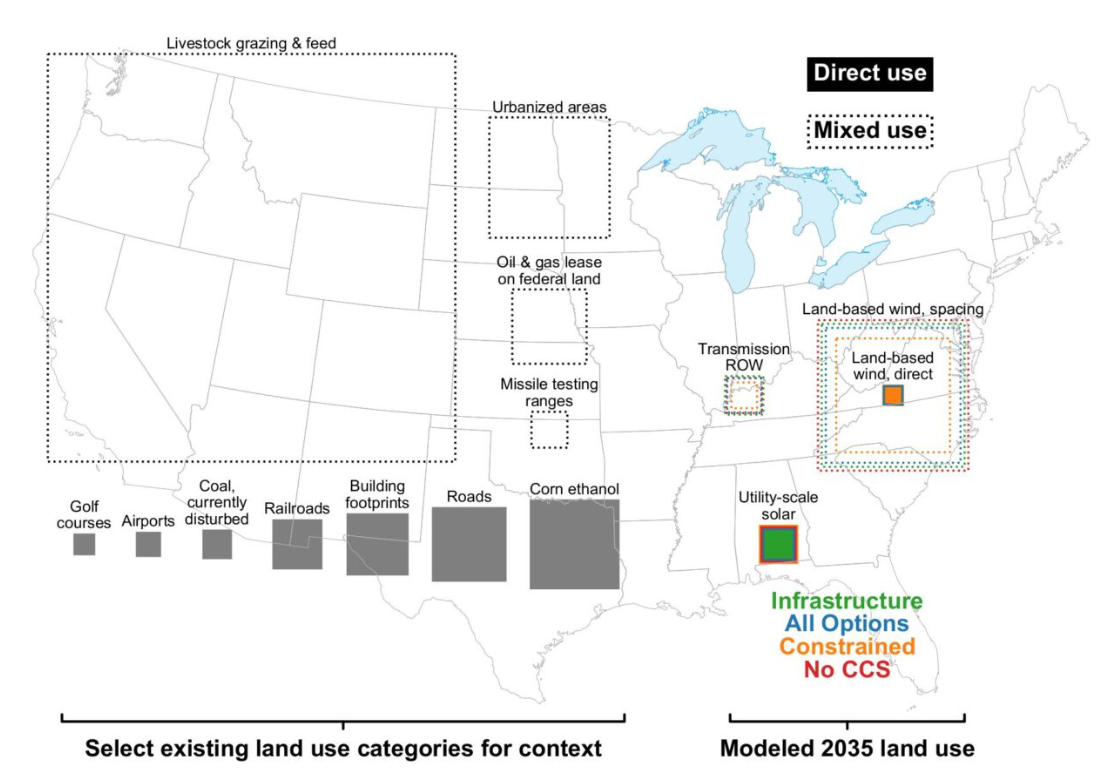 Image source.
The study doesn’t take into account rooftop solar because… well… rooftop solar doesn’t use any additional land. And there are several mixed-use applications for solar panels to consider.
For example, agrivoltaics is the practice of siting solar panels above crops and livestock areas (see feature photo). This technique has been found to increase certain crop yields by shading plants from intense sunshine and retaining ground moisture, and it also provides a secondary source of income for the hardworking farmers who feed the world.
Solar panels are also being installed in urban locations above parking lots, water canals, and bike lanes to simultaneously create shade and clean energy right where it’s needed.
Finally, in a practice known as "floatovoltaics," solar panels are floated on reservoirs and wastewater treatment plants. The water cools the panels to increase efficiency during peak sun hours, and the panels shade the water to reduce evaporation loss.
And that brings us to our next point…
Image source.
The study doesn’t take into account rooftop solar because… well… rooftop solar doesn’t use any additional land. And there are several mixed-use applications for solar panels to consider.
For example, agrivoltaics is the practice of siting solar panels above crops and livestock areas (see feature photo). This technique has been found to increase certain crop yields by shading plants from intense sunshine and retaining ground moisture, and it also provides a secondary source of income for the hardworking farmers who feed the world.
Solar panels are also being installed in urban locations above parking lots, water canals, and bike lanes to simultaneously create shade and clean energy right where it’s needed.
Finally, in a practice known as "floatovoltaics," solar panels are floated on reservoirs and wastewater treatment plants. The water cools the panels to increase efficiency during peak sun hours, and the panels shade the water to reduce evaporation loss.
And that brings us to our next point…
Water use of solar panels vs fossil fuels
Fresh water is a crucial part of the environment, but it’s typically not the first thing people consider when it comes to generating and distributing energy. However, transitioning to renewable energy – namely wind and solar – could free up massive amounts of fresh water for farming and aquatic ecosystems. In 2019, a review of 32 water use studies found that the median life cycle water consumption of photovoltaic solar is 330 liters per megawatt-hour of electricity, which boils down to a third of a liter of water per kilowatt-hour (kWh) of solar electricity – or just under 12 fluid ounces. For context, one kWh is roughly what you need to power a refrigerator for 24 hours, and 12 fluid ounces is the volume of a standard can of soda pop. How does that compare to other types of electricity generation? Solar energy uses:- Half of the water of gas-fired power plants
- Seven times less water than nuclear and coal power plants
Water use of solar vs other electricity sources
| Energy source | Life cycle water consumption per MWh of electricity | 12 fl. oz. cans of soda per kWh of electricity* |
| Oil | 3,220 Liters | 10 |
| Nuclear | 2,290 Liters | 7 |
| Coal | 2,220 Liters | 7 |
| Natural gas | 598 Liters | 2 |
| Photovoltaic solar | 330 Liters1 | 1 |
| Wind | 43 Liters | 1/8 |
- The potential to reduce evaporation loss in canals and reservoirs
- Oil and petro-chemicals spills like the Exxon Valdez, Deepwater Horizon, and pipeline ruptures that devastate ecosystems
- Everyday oil and gas runoff from cars that pollutes waterways
Mining and material use
Mining for materials is often seen as a blemish on the environmental impact of solar, and there’s no doubt that mining for the silicon, aluminum, copper, and silver used to manufacture solar panels is environmentally problematic. That’s something the solar industry has to own up to and improve on. But it’s also worth zooming out a bit. In 2023, data scientist Hannah Ritchie crunched the numbers on the total mining needs for a clean energy transition and found that to rapidly transition to a clean energy economy, we’d need to scale “low-carbon” energy mining up to 28 million tons of materials per year – about 7 times the amount we’re currently extracting. That sounds like a lot of mining… until you weigh it against the 15 billion tons of coal, oil, and natural gas currently being mined each year by the fossil fuel industry. Yes, that’s billions – with a B – of tons of fossil fuels extracted each year and around 535 times more than the total mining tonnage required for a clean energy economy. It’s also worth noting that mining for solar is just one part of the 28 million tons of minerals needed for low-carbon energy resources, which includes materials for wind, hydro, EVs, batteries, nuclear, and transmission infrastructure.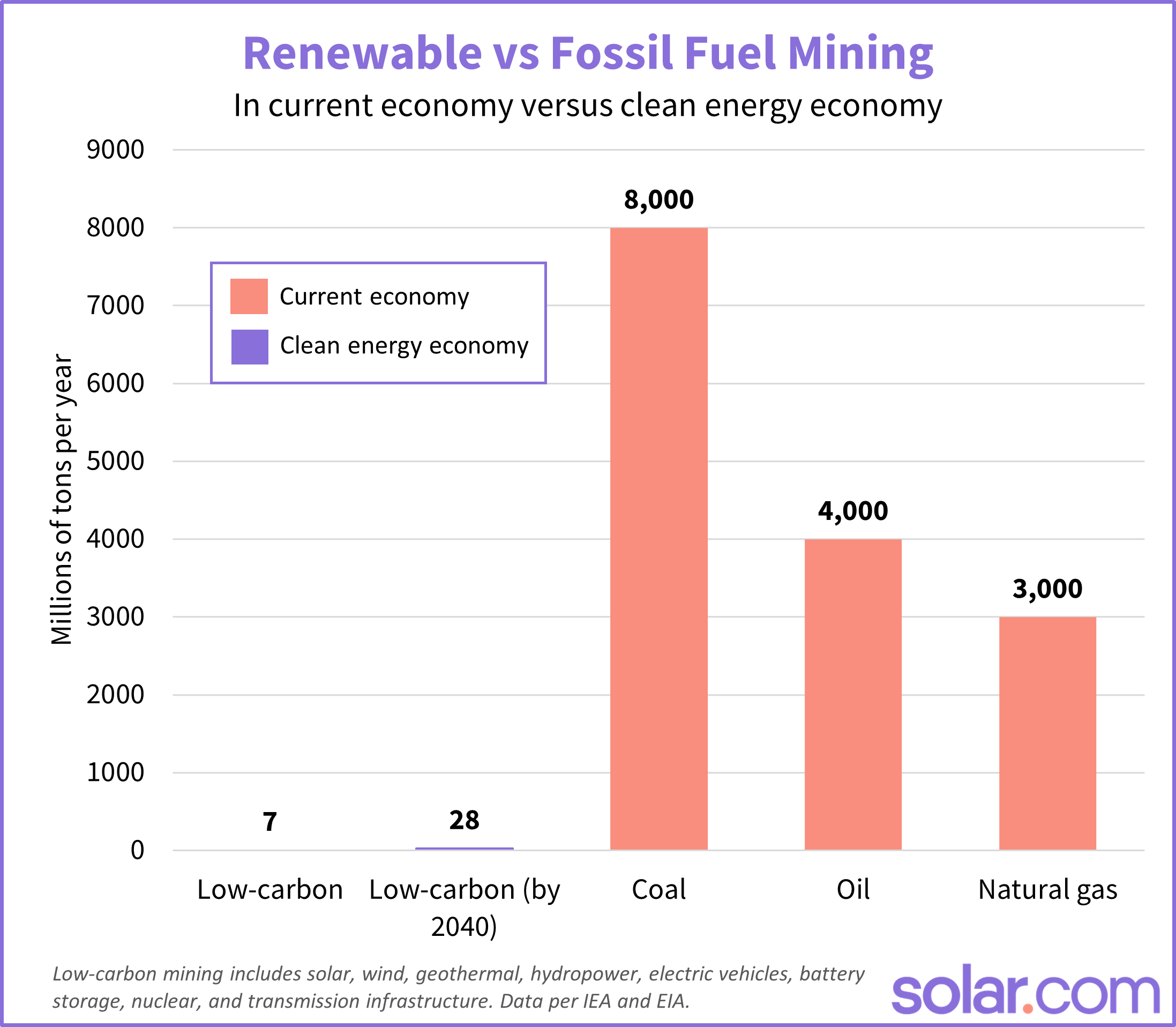 Now, you may be wondering how this is even possible. How can fossil fuels require so much more mining than low-carbon energy sources? It boils down to how efficiently these materials are used.
Materials use of solar vs fossil fuels
The key difference between mining materials for solar energy and fossil fuel energy is that with solar you are using the materials solely to build infrastructure, while with fossil fuels you are mining for infrastructure and fuel. Theoretically, all the materials mined to build energy infrastructure can be recycled. However, it’s virtually impossible to recycle coal, oil, and gas once it has been burned and released into the atmosphere. While there’s a lot to be desired from solar panel recycling (and the end-life of oil wells, for that matter), fossil fuels have an insatiable appetite for mined fuels that far outweighs the material needs for renewable energy.Noise pollution
We’ve covered how solar energy is better for the environment than fossil fuels in terms of air, land, water, and mining. But perhaps the most overlooked environmental benefit of solar energy is that it’s quiet. Noise pollution is linked to “stress related illnesses, high blood pressure, speech interference, hearing loss, sleep disruption, and lost productivity,” according to the EPA. Like any energy source, there is noise associated with manufacturing and installing solar panels. However, with no moving parts or combustion, solar panels themselves are virtually noiseless except for a soft hum from the inverter, which is capped at 45 decibels (about the volume of a quiet room) and only occurs during the day.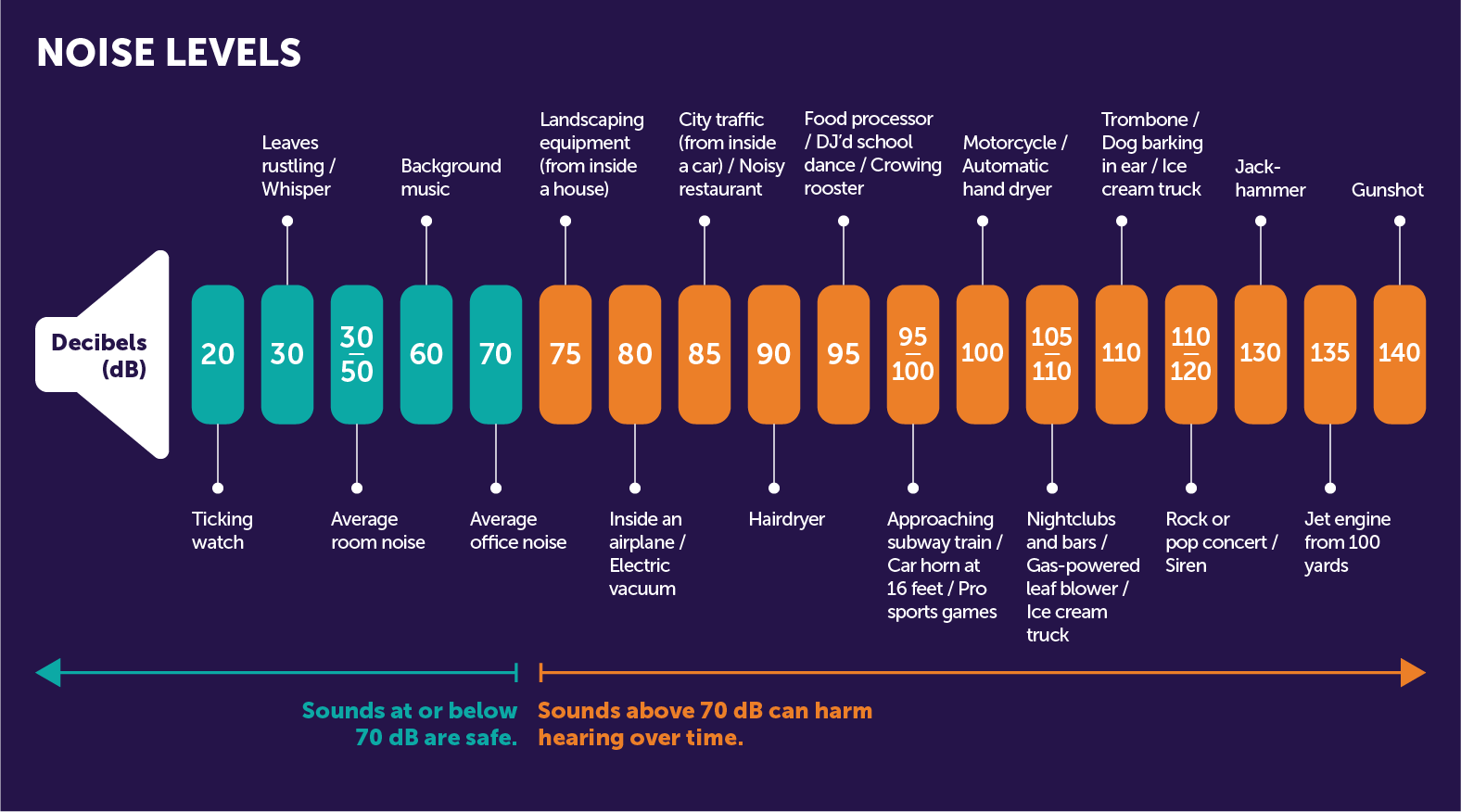 Meanwhile, coal and natural gas power plants generate, on average, 80-85 decibels – somewhere between a vacuum cleaner and city traffic – which can negatively impact workers and the surrounding community. For example, the Ellwood gas power plant in Santa Barbara County, Cali. is located within 200 feet of school property, where noise levels from the plant can contribute 60-64 decibels.
Not only are solar panels quieter than fossil fuels, they can actually help mitigate noise pollution. There are pilot programs for using solar panels as clean-energy-producing noise barriers along roadways to reduce the noise pollution from cars powered by… you guessed it… fossil fuels.
Meanwhile, coal and natural gas power plants generate, on average, 80-85 decibels – somewhere between a vacuum cleaner and city traffic – which can negatively impact workers and the surrounding community. For example, the Ellwood gas power plant in Santa Barbara County, Cali. is located within 200 feet of school property, where noise levels from the plant can contribute 60-64 decibels.
Not only are solar panels quieter than fossil fuels, they can actually help mitigate noise pollution. There are pilot programs for using solar panels as clean-energy-producing noise barriers along roadways to reduce the noise pollution from cars powered by… you guessed it… fossil fuels.
Solar Benefits the Environment
People often think of “the environment” as places where humans are not. However, the environment is everything that impacts life on Earth, including the air, water, land, materials, and even noise. Compared to fossil fuels, solar energy has a substantially smaller impact on the environment in all five of these arenas. Better yet, rooftop solar is a rare win-win for homeowners, as it provides an opportunity to reduce their environmental impact and their essential electricity costs. Connect with an Energy Advisor to see if home solar makes sense for you.More in 5 Ways That Solar Energy Benefits the Environment

The World Just Hit 3 Terawatts of Solar: Unpacking the New Milestone
Sam Wigness·
What is the Carbon Footprint of Solar Panels?
Sam Wigness·
Which Celebrity Mansion Could Offset the Most CO2 With Solar Panels?
Sam Wigness·
Is Solar Energy Renewable?
Sam Wigness·
Jevons Energy Efficiency Paradox
Sam Wigness·
Clean Drinking Water For All: Interview with DIGDEEP
Johanna Poole·
Going Green: 5 Ways to Live a Sustainable lifestyle as a Suburban family
Toiia R·
7 Easy Tips for an Eco Home
Hannah Glenn·
10 Cleantech Startups Compete for the Global Stage in Climate Action
Robert Tseng·
Carbon Fee and Dividend with Davia Rivka
Hannah Glenn·
China Drives Clean Energy Forward with a Solar Roadway
Siena Hacker·
Affordable Plug-and-Play Geothermal with Dandelion Air
Hannah Glenn·
Sam Jammal on People Empowering Solar
Hannah Glenn·
What are the greenest solar panels?
Isaac Ost·
High Time for Solar? Marijuana Growers and the Solar Industry
Sam Wigness·
5 Eco Homes We Love
Hannah Glenn·
Can Solar Panels be Recycled?
Siena Hacker·
What Does the Future Look Like For Renewables?
Teddy Kahn·
How Cutting Trees Helps the Environment When You Install Solar
Sam Wigness·
Fossil Fuel Alternatives – Three Renewable Options
Maria Carrillo·
Substainable Living & The Single Mom
Shanicia Boswell·
3 Small (But Incredibly Impactful) Lifestyle Changes To Lower Your Carbon Footprint TODAY!
Tiffany S·
Clean Air at Home: Interview with Moms Clean Air Force
Kyle Cherrick·
Mayor Garcetti on Moving L.A. Toward 100 Percent Renewable Energy
Sam Baker·
“Let Us Not Take This Planet for Granted. I Do Not Take Tonight for Granted.”
Shawn Showkati·
Solar Adoption is about Pollution, Health, and Safety
Sam Baker·
Your next step
See exactly what solar costs on your roof
We use satellite data and your utility rates to show your price and payback in about 90 seconds, with no sales calls.