The Pros and Cons of Rooftop Solar in 2026
Solar panels provide homeowners a unique opportunity to own the electricity that powers their home, instead of renting it from a utility. However, just like buying a home, solar is a long-term investment with many facets to consider.
So, we’ve compiled a list of the pros and cons of solar to help you decide if 2026 is the right year for you to jump on board.
Related reading: Solar Pricing in 2026: Are Costs Going Up or Down?
*
*
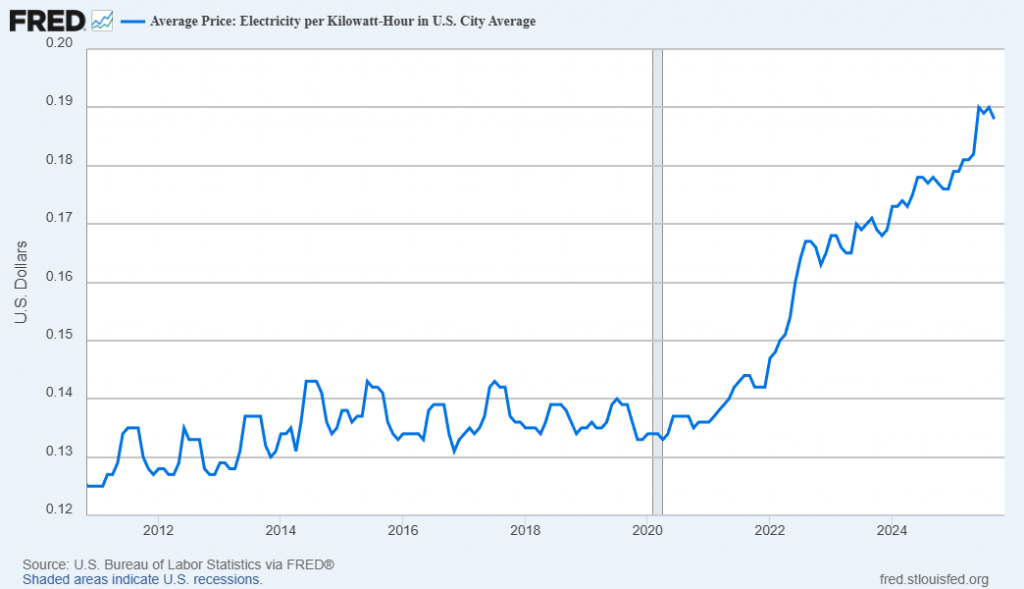 Installing solar panels allows homeowners to set a low and fixed price for the electricity that powers their homes and electric vehicles. For example, the cost per kilowatt-hour (kWh) for rooftop solar electricity is typically around 8 cents per kWh — less than half the cost of the average utility rate in the US (19 cents per kWh).
In other words, going solar gives you control and independence over your electricity rate — something you won't get from your utility.
Consider how much your electric prices have gone up over the last few years and how they will increase in the coming years. Going solar reduces your exposure to the increasing expense of renting power from the utility.
Installing solar panels allows homeowners to set a low and fixed price for the electricity that powers their homes and electric vehicles. For example, the cost per kilowatt-hour (kWh) for rooftop solar electricity is typically around 8 cents per kWh — less than half the cost of the average utility rate in the US (19 cents per kWh).
In other words, going solar gives you control and independence over your electricity rate — something you won't get from your utility.
Consider how much your electric prices have gone up over the last few years and how they will increase in the coming years. Going solar reduces your exposure to the increasing expense of renting power from the utility.
Pros of Going Solar in 2026
Solar is a hedge against energy inflation
Energy inflation has been a kitchen-table issue for the last several years. While the price of eggs captures headlines, the cost of utility electricity often goes overlooked. The average utility rate in the U.S. increased 39% from November 2020 to November 2025, adding over $630 per year to the electricity costs of a household using 1,000 kWh per month. Utility rates are expected to continue climbing over time, and will likely be accelerated by growing electricity demand to power AI data centers and electric vehicles.
Installing solar panels allows homeowners to set a low and fixed price for the electricity that powers their homes and electric vehicles. For example, the cost per kilowatt-hour (kWh) for rooftop solar electricity is typically around 8 cents per kWh — less than half the cost of the average utility rate in the US (19 cents per kWh).
In other words, going solar gives you control and independence over your electricity rate — something you won't get from your utility.
Consider how much your electric prices have gone up over the last few years and how they will increase in the coming years. Going solar reduces your exposure to the increasing expense of renting power from the utility.
The 30% federal solar tax is still available for Third-Party Owned solar arrangements
While the consumer-claimed federal solar tax credit (25D) is officially terminated, homeowners can still benefit from the business-claimed (48E) through Third Party Owned solar arrangements for a few more years. These options include:- Leasing solar panels
- Power Purchase Agreements (PPAs)
- Prepaid solar products with the option to own the system after 6 years
Solar modules are warrantied to last 25 years
As the lifespan of solar panels increases, so does the length of manufacturer and installation warranties. Most major solar manufacturers, including REC, Q Cells, and Panasonic offer warranties that guarantee a certain level of output over 25 years. A typical rooftop solar system returns its investment in 5-8 years. That leaves up to 20 years of warranted system life where the solar array is returning value – all while avoiding the ever-increasing cost of renting power from the utility. And remember, solar panels don't disappear when they reach the end of their warranty; their production capacity just slowly degrades over time.Solar Increases Your Home Value
A data analysis by solar.com shows that solar increases home value, although the exact amount is determined by local factors. Our findings aligned with studies from Zillow, the Department of Energy’s Lawrence Berkeley Laboratory, and Sandia National Laboratories. Prospective homeowners see the value in a high-quality, functioning solar array to help lower their household expenses when they’re purchasing a new home. Solar helps homes stand out in a competitive market.Cons of Going Solar in 2026
The tax credit for purchasing solar is terminated
The 25D tax credit for buying solar panels with cash or a loan ended on December 31, 2025. For more than two decades, this tax credit improved the economics of buying and owner solar/battery equipment. Without this incentive, homeowners will have to decide between:- Owning solar with the expectation of a longer payback period or higher loan payment.
- Entering third-party owned solar arrangements to benefit from the 48E solar tax credit.
Net Metering Rollbacks
Under Net Energy Metering (NEM), utilities credit solar module owners for excess generation that is distributed back to the grid. While many utilities still offer net metering, some have begun rolling it back for a variety of reasons. Notable examples include:- California's NEM 3.0 Solar Billing policy
- New York's declining rebate values under the NY SUN program
- Arizona's Net Billing battle
- North Carolina reducing net metering compensation
Solar scams
Solar scams have long plagued the industry, harming both consumers and reputable solar companies. But that is no reason to throw the baby out with the bathwater. Going solar through a vetted and reputable installer is a means to clean, cheap electricity for millions of American homeowners. Here’s how to avoid falling victim to a solar scam:- Avoid high-pressure sales tactics, which are most commonly deployed by companies that knock on doors. You’re being asked to make a large financial decision when you go solar that you should be able to evaluate and have confidence in. Any reputable salesperson will deliver fantastic value and have complete confidence that you will come to that conclusion on your own. Pricing and availability can change, so it's common for proposals to expire after a week or two. But that’s a lot different than 24 hours or “sign today” to achieve a certain rebate or promotion that undoubtedly will be there tomorrow.
- Know your components. Solar scams will often not disclose the selected technology or say “or equivalent,” which allows the installer to substitute lower-cost components with your knowledge.
- Get familiar with financing terms. Understand the difference between your installed cost and any rate buydowns or “dealer fees” in a selected finance package.
- Research the sales company and installer. While online reviews might not tell the complete story (generally people don’t leave reviews when things go as expected), spotting trends in a number of reviews can help expose what might go wrong.
Understanding if Battery Storage Makes Sense For You
Batteries are not required for solar systems, but they can help maximize a system’s value and provide backup power during grid outages. Homeowners can rely on stored solar generation at peak grid times, thereby avoiding higher utility electricity costs. While battery costs continue to decrease, the overall cost is still considerable. In some utility areas that do not have 1:1 net metering (where excess solar production is sent back to the grid and you’re credited at full retail value) installing a battery with solar allows you to “bank” all the energy you produce from solar and deploy it when its most advantageous to you. It’s your power, you can use it when you want. For example, after California implemented “net metering 3.0” the Return on Investment for going solar is often improved by adding a battery, even with the additional expense. Think of adding energy storage as future-proofing your solar investment. No matter what your utility does to change the value of your solar power if you store it you keep it.Breaking Down the High Upfront Cost
Even with local and federal incentives, going solar still has a relatively high upfront cost for homeowners paying cash. Thankfully, there are $0-down solar loan options that spread the cost out over time and provide savings on day one. In general, solar should be thought of as a secure, long-term investment. Not only will it immediately reduce electricity costs, but it also shields homeowners from future utility rate hikes. Many homeowners understand that going solar re-allocates the money you’d otherwise pay to your utility to “rent” power into owning a system that will generate electricity for 20+ years. The big difference is once you establish the solar price that value doesn’t change, unlike renting power from your utility, which likely goes up every year. And by going solar you likely will increase your home value, and can be eligible for valuable tax credits and other rebates. * *Solar Panels Don’t Move With You
Unfortunately, solar panels won’t pack up and move with you. They’re a long-term investment, so if you’re planning on moving in the near future it may not make financial sense to purchase a system now. As mentioned, solar panels do help homes sell more quickly and for more money. Even if you move, you'll likely recoup the cost of your solar system — and perhaps even come out ahead — through the added value to your home. Pro tip: Solar arrays that are leased can complicate a home sale as the new owner has to agree to assume the lease or the seller has to buy out the lease, which can be expensive as it's based on the net present value of the remainder of the contract. However, solar arrays financed via a loan product are simple. Typically, the seller pays off the remaining principal via proceeds from the sale, which is offset by the premium the buyer pays to purchase a house that requires renting less power from the utility. Related: Is It Worth Going Solar in Your Golden Years? A Retired NASA Scientist Weighs InReady to see your numbers?
See your real solar price in 90 seconds
Enter your address — we'll show you the system, savings, and price for your exact roof.
The Pros and Cons of Solar in 2026
The pros and cons of solar energy are constantly changing as the industry evolves. In 2026, the key things to watch for are:- New tariffs increasing the cost to go solar soon
- Streamlined permitting timelines and lower costs mean systems are installed quickly and likely at the lowest price point we'll see for many years
- Rising utility rates as AI data centers increase electricity demand.
- Changes to local incentives, including state rebate programs and net metering.
More in The Pros and Cons of Rooftop Solar in 2026

2026 SCE Time-Of-Use (TOU) Rates: A Beginner’s Guide
Sam Wigness·
How Much Does Electricity Cost in Your State?
Sam Wigness·
How Much Have Electricity Prices Increased in 2025?
Sam Wigness·
Why Electricity Costs Are Rising in 2025 and Where They Are Rising Fastest
Sam Wigness·
What’s The Average Electric Bill in 2026 And How Does Yours Compare?
Sam Wigness·
Why Is My Electricity Bill So High in 2026?
Sam Wigness·
Con Edison Electricity Rates Are Rising – Here’s How Solar Can Help
Sam Wigness·
Will Electricity Prices Go Down in 2026?
Sam Wigness·
What’s the Average Electric Bill for a 3 Bedroom House?
Sam Wigness·
What’s the Average Electricity Bill for a 2 Person Household in 2026?
Sam Wigness·
What is the Carbon Footprint of Solar Panels?
Sam Wigness·
Con Edison Electric Rates in 2024: Plans, Rate Hikes, and Lowering Your Bill
Sam Wigness·
Should CA Solar Owners Be Worried About Income Based Electricity Bills?
Sam Wigness·
LADWP Electric Rates in 2026: Peak Hours & Rate Plan Options
Sam Wigness·
PG&E Electric Rates in 2026: Peak Hours & Rate Plans
Sam Wigness·
2024 SDG&E Electric Rates: How To Lower Your Electricity Costs in San Diego
Sam Wigness·
Which Celebrity Mansion Could Offset the Most CO2 With Solar Panels?
Sam Wigness·
How Much Is The Average Electric Bill in California?
Sam Wigness·
Why Is My Electric Bill So High With Solar Panels?
Sam Wigness·
How Do You Calculate The Number of Panels on a 16 kW Solar System?
Ryan Nixon·
What Is the Average Monthly Electric Bill With Solar Panels?
Sam Wigness·
What Uses the Most Electricity in a Home?
Sam Wigness·
How To Cut Your Electric Bill by 75 Percent
Sam Wigness·
How Many kWh per Day Is Normal?
Sam Wigness·
How To Lower Your Electric Bill With Solar Panels
Sam Wigness·
5 Reasons Solar Panels Are Worth It in Boston
Sam Wigness·
Is Solar Still Worth It With NEM 3.0 in California? 5 Ways To Maximize Your Savings
Sam Wigness·
Is Solar Energy Renewable?
Sam Wigness·
Best and Worst Moments for Solar Power in 2022
Sam Wigness·
5 Reasons Why People Don’t Buy Solar Panels (And Why They Might Reconsider)
Sam Wigness·
5 Advantages of Solar Energy
Sam Wigness·Is Solar a Good Investment?
Sam Wigness·
The Impact of SCE’s Rate Changes
Patrick Crowley·
SoCal Edison Electricity Rates Increase in 2018 & 2019
Isaac Ost·
Your next step
See exactly what solar costs on your roof
We use satellite data and your utility rates to show your price and payback in about 90 seconds, with no sales calls.