How Much Do Solar Panels Save?
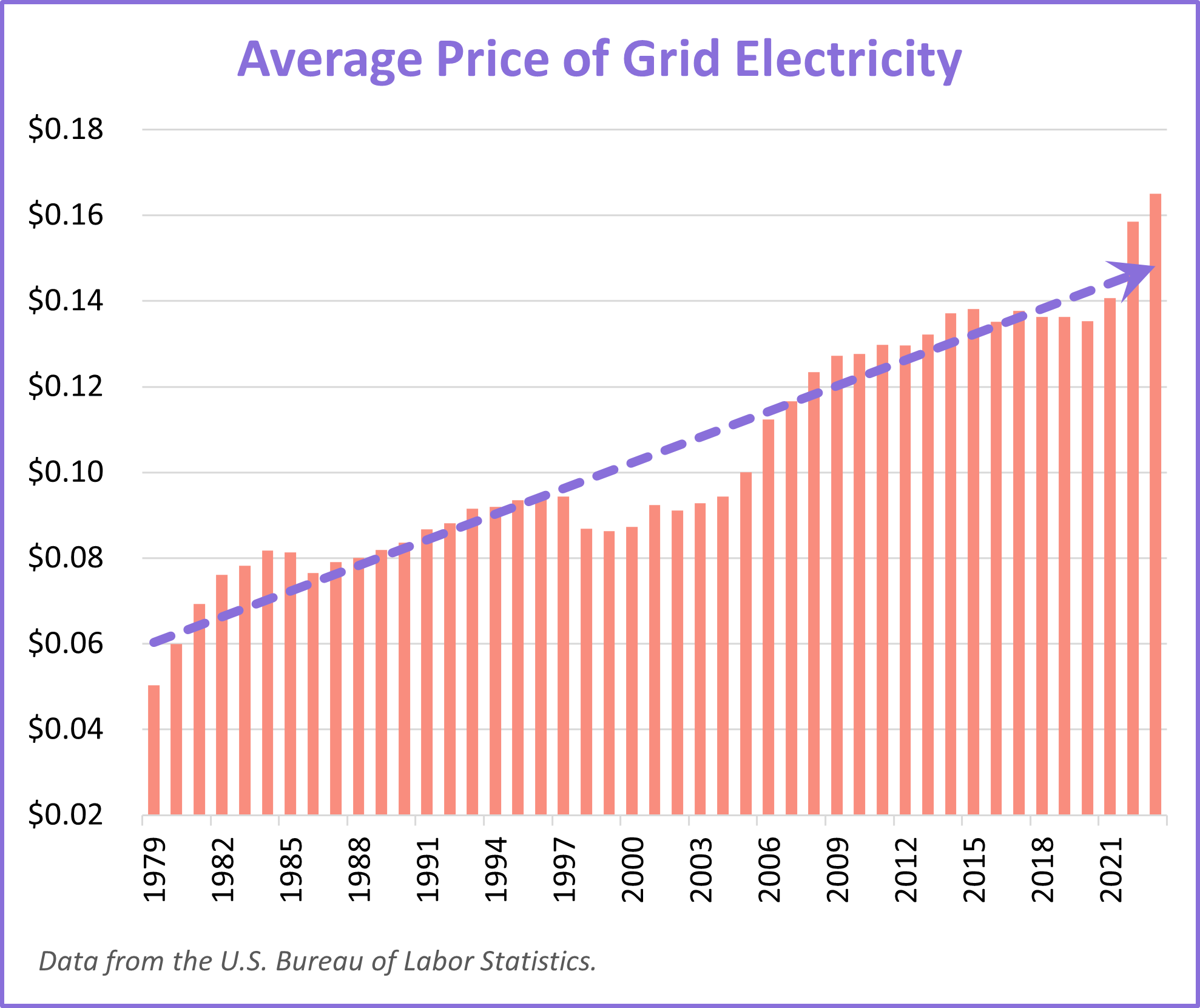
With the average grid electricity price jumping 18% in just the last two years, many homeowners are now turning to solar power to shield themselves from ever-increasing utility rates.
But exactly how much money do solar panels save?
In this article, we'll explore how going solar saves you money and the variables that impact your overall savings.
*
*
 Let’s look at how much you are currently paying for your electricity.
How much money do solar panels save?
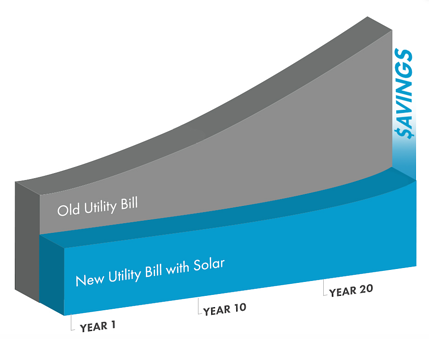
Over the 25-year warranty, solar panels can save tens of thousands of dollars by offsetting your utility bill with a lower cost for solar power. When you install solar panels on your roof, you are essentially replacing part or all of your electricity bill with monthly payments on a solar system. And with the cost of solar plummeting over the last 40 years, the monthly payments for solar panels are typically far less than paying for grid electricity. Generally, if your electricity costs are higher than your solar costs, you’re going to see savings by switching to solar.
Let’s look at how much you are currently paying for your electricity.
Cost per kWh of solar vs grid electricity
The easiest way to compare the cost of solar versus grid electricity is by breaking down the cost of each kilowatt-hour (kWh) -- known as the levelized cost of electricity. Without solar panels, your levelized cost of electricity is simply the rate your utility charges. The map below shows the average utility rate in each state. By comparison, the average cost of home solar electricity purchased on solar.com is around 8 cents per kWh -- although it varies based on the size, complexity, and location of the project. Keep in mind, grid electricity prices continue to rise over time. Typically, utility rates rise at an average rate of 3% per year. However, in recent years, we've seen double-digit rate increases in a single year and we're not exactly expecting prices to go back down in the foreseeable future. Going solar not only lowers your electricity costs, it stabilizes them for 25 years and shields you from utility rate hikes.
Ready to see your numbers?
See your real solar price in 90 seconds
Enter your address — we'll show you the system, savings, and price for your exact roof.
What else affects how much money solar panels save you?
Your utility electricity rate and the price per kWh of your solar system are the two biggest factors in determining how much you can save with solar panels. But these are not the only factors. Let's explore some of the things that affect how much money solar panels can save you.Federal and local solar incentives
One way to save more money by going solar is to claim local and federal incentives. In 2026, homeowners can still benefit from a federal tax credit through Third-Party Owned (TPO) solar. There are a few forms of TPO solar that are eligible for a business-claimed tax credit. Learn more in our TPO resource center below:- Leasing Solar Panels: The Complete Guide
- Solar PPA: The Simple Guide to Power Purchase Agreements
- Prepaid Solar Leases & PPAs: A New Path to Owning Solar
Financing method
Another crucial variable is how you finance your solar system. Paying cash for your solar system offers the most savings because you won't pay interest on a loan. But not everybody has $25,000 laying around, which is why many homeowners choose to finance their solar system with a loan. Solar loans can provide immediate energy cost savings by replacing your electricity bill payments with lower solar loan payments. However, in the long run, the interest reduces how much you can save with solar panels.Time
The payback period of going solar is typically around 7-10 years, leaving well over 15 years to accumulate savings while the panels are still under warranty. But solar panels don't explode into dust once the warranty is up. They still produce electricity, albeit at a lower rate as they naturally degrade over time. So, the longer you own the solar panels -- and the house they're installed on -- the longer you can accumulate savings.Solar system offset
Offset measures how much electricity a solar system produces compared to household energy consumption. For example, a system with 100% offset with produce as much electricity as a household uses and completely offset your utility electricity bill. Shooting for 100% offset, or slightly more, is common and often provides the greatest energy cost savings. However, solar panels can still save you money by offsetting 50% or 75% of your electricity usage. * *Sun exposure
Another major variable that affects savings is the amount of sun your solar panels get, known as solar irradiance. Essentially, the more sun your solar panels get, the more money they can save you. While sun exposure largely depends on location, it's also affected by shading from trees and other obstructions.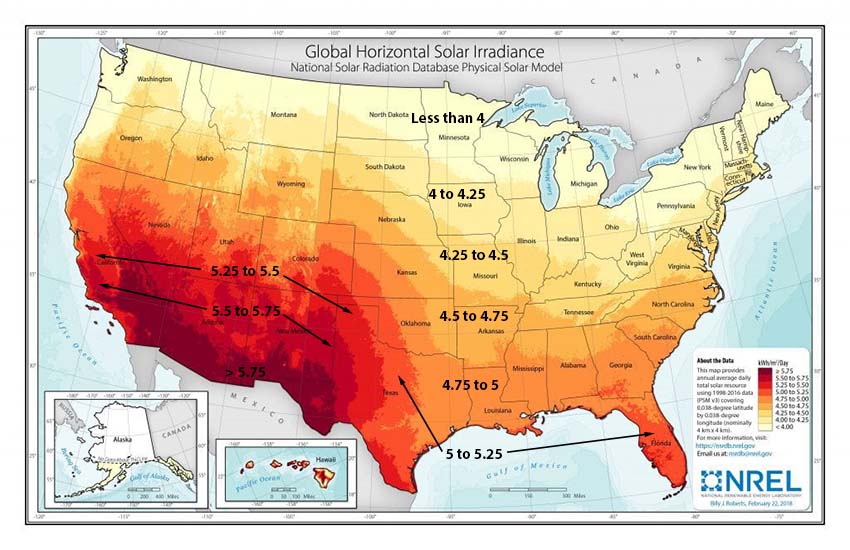
Net metering policies
Another factor in how much solar panels can save you is your utility's net metering policy. Net metering is a billing structure that compensates solar owners for the excess electricity they push onto the grid. This structure allows solar owners to offset their utility costs even when the sun isn't shining. In most cases, 1 kWh of electricity pushed onto the grid offsets 1 kWh of electricity pulled off the grid. However, energy utilities are making a nationwide push to weaken net metering by paying less than retail prices for solar exports. Most notably, California's NEM 3.0 reduces the export rates by over 75%. It's worth noting that even with this reduction, California homeowners can still save tens of thousands of dollars with solar panels under NEM 3.0.How much do solar panels save? It's up to you!
With electricity prices surging, going solar is a no-brainer in terms of saving money. Solar panels save you money by replacing your electricity bill with lower monthly solar payments. Over time the 25-plus year life of a solar system, often adds up to tens or hundreds of thousands of dollars in energy cost savings. There are a handful of variables that can affect solar savings, but perhaps the most important is time. The sooner you go solar, the sooner you can hit your payback period and start accumulating savings! Start your solar project with multiple bids from vetted installers.More in How Much Do Solar Panels Save?
Eversource Electricity Supply Rates Jump 24%: Run Your Own Solar Math
Sam Wigness·
Utilities Want $18.6B More: What Rate Hikes Do to Your Solar Payback
Sam Wigness·
Is Solar Worth It in Los Angeles? 2026 Cost, Savings, and Utility Rules
Sam Wigness·
Your electric bill is outpacing inflation by almost 2x — why that trend is about to get worse
Max Aram·
PG&E Electric Rate Increases: How Much Are Bills Rising?
Sam Wigness·
APS Electric Rate Increase in 2026: What Customers Need to Know
Sam Wigness·
NYSEG Electric Rate Increase in 2026: What Customers Need to Know
Sam Wigness·
Is Solar Worth It in New Jersey in 2026?
Sam Wigness·
NEM 3.0 Export Rate Adders: Why It Pays to Go Solar Early in NEM 3.0
Sam Wigness·
Can You Get Free Solar Panels From the Government in 2026?
Sam Wigness·
What Are the Negatives of Solar Panels?
Sam Wigness·
Can You Get Tesla Solar Panels for Free?
Sam Wigness·
Do People Really Save Money With Solar Panels?
Sam Wigness·
Does Home Depot Have Free Solar Panels?
Sam Wigness·
What Is the Cost of Solar for a 3 Bedroom House?
Sam Wigness·
Free Solar Panels? The Truth Behind the Ads for Free Solar
Sam Wigness·
What Is the Average Payback Period for Solar Panels?
Sam Wigness·
What Is Net Metering And Which States Have it?
Sam Wigness·
Are Solar Panels Worth It? Calculate Your Return on Investment
Sam Wigness·
Department of Energy Study Proves Customers Save with Solar.com
Sam Wigness·
Renewable Energy May Soon be Cheaper Than Existing Fossil Fuel Plants
Siena Hacker·
How the 2018 Solar Tariffs Will Affect Prices
Hannah Glenn·
Solar Tariffs Are Here: The Sky Is NOT Falling, but the Sunshine Still Does
Kyle Cherrick·
With Potential Solar Prices Increasing, Trump is Accelerating the Adoption of Solar
Teddy Kahn·
Will I Save Money When I Go Solar?
Gordon Algermissen·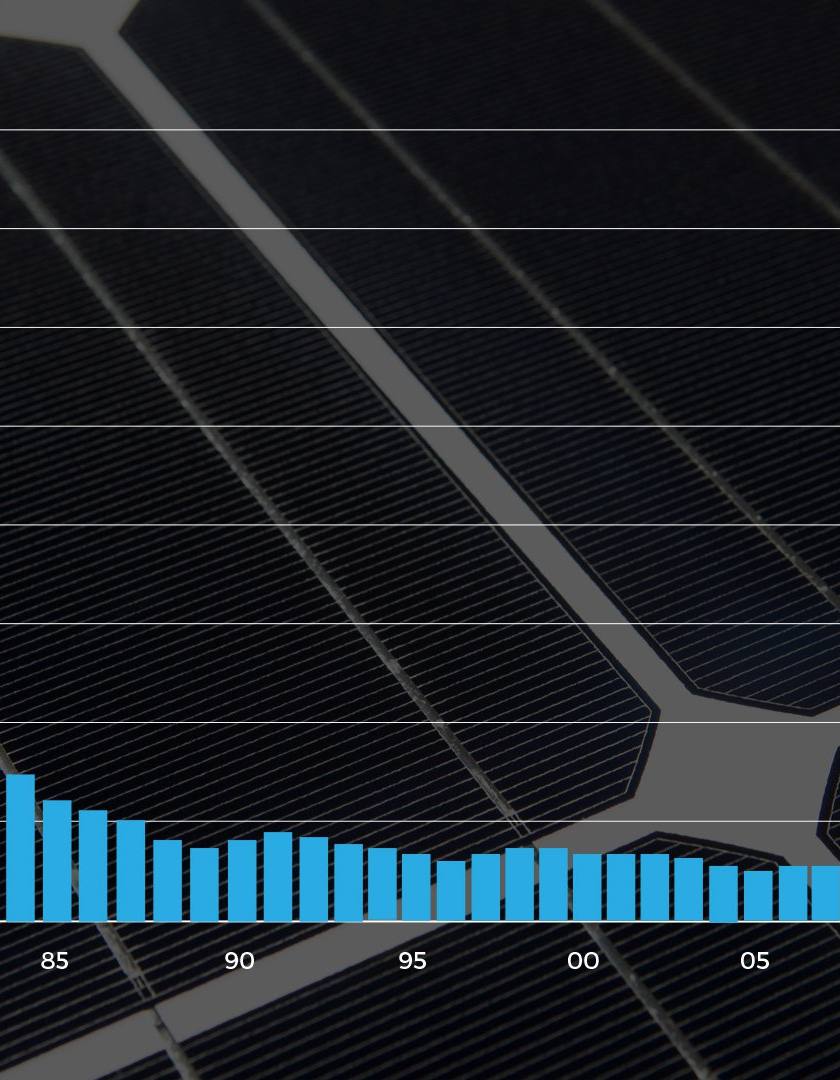
The Falling Price of Solar Power
Sam Baker·
What You Need to Know about Net Metering 2.0
Gordon Algermissen·
The Advantages of Solar Energy during the Holidays
Sam Baker·
Your next step
See exactly what solar costs on your roof
We use satellite data and your utility rates to show your price and payback in about 90 seconds, with no sales calls.