Solar Panel Installation Cost
Here’s an exciting number: The cost of residential solar panel systems dropped a remarkable 64 percent from 2010-2020, according to the National Renewable Energy Laboratory (NREL).
A solar panel system is comprised of many pieces. You might already know the cost of a solar panel system before and after tax credits, in broad strokes.
Here’s an example of how we can break down solar panel costs and what it typically costs to install a system.
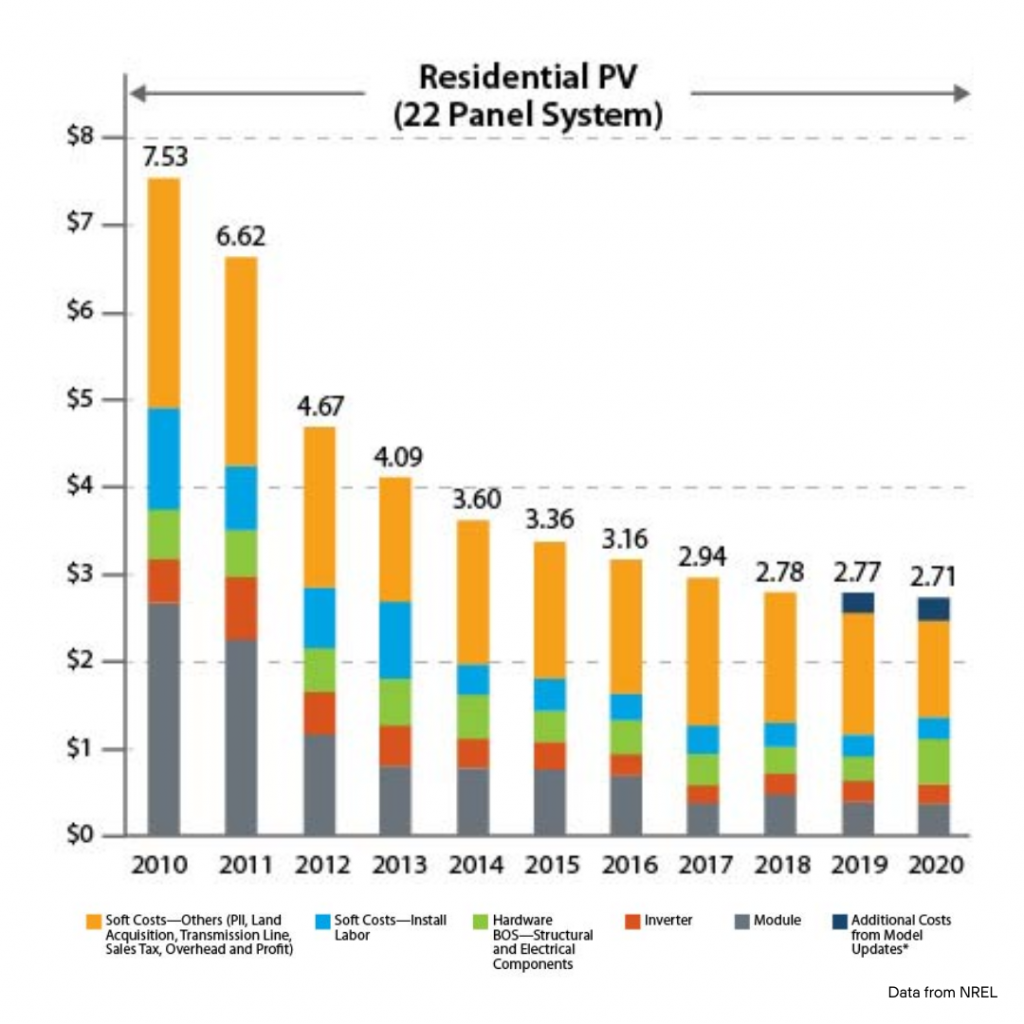 Let’s take a closer look at the breakdown of hard costs vs. soft costs associated with installing residential solar panels.
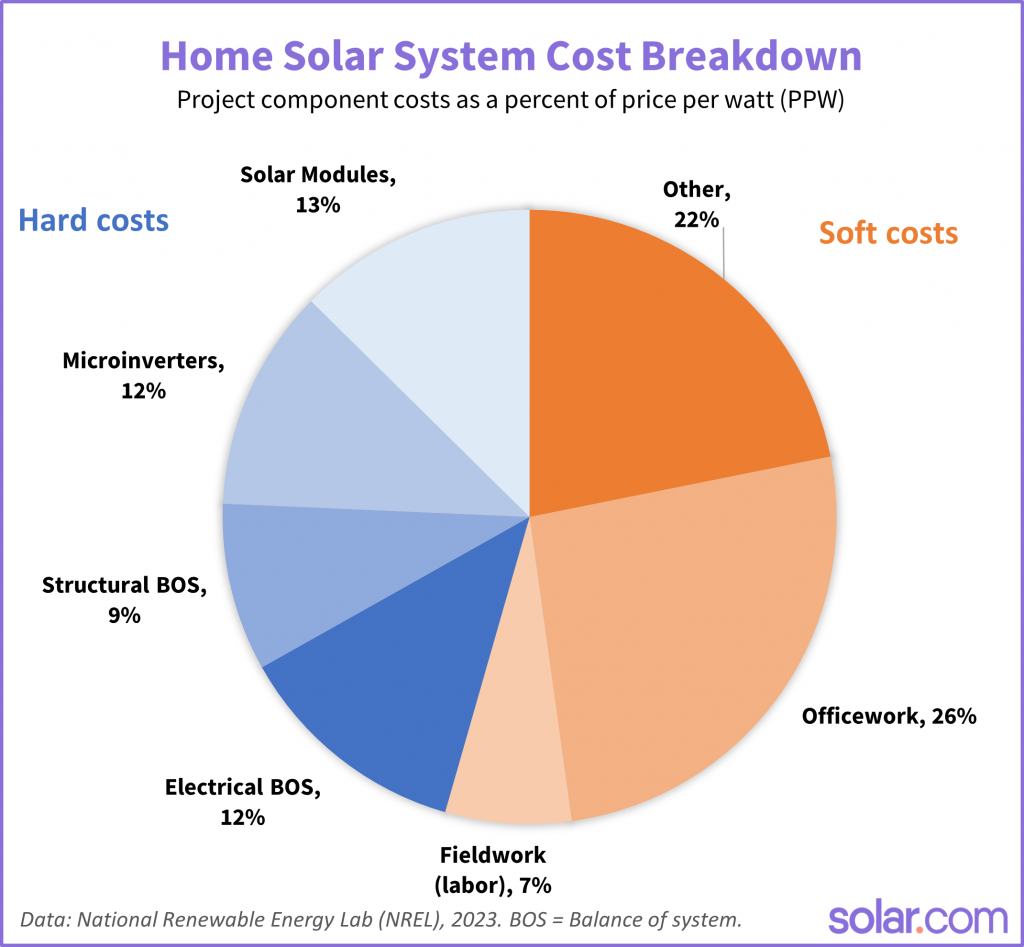 The majority of the project cost goes toward soft costs, including labor, permitting, overhead, and profit, which we'll explore below.
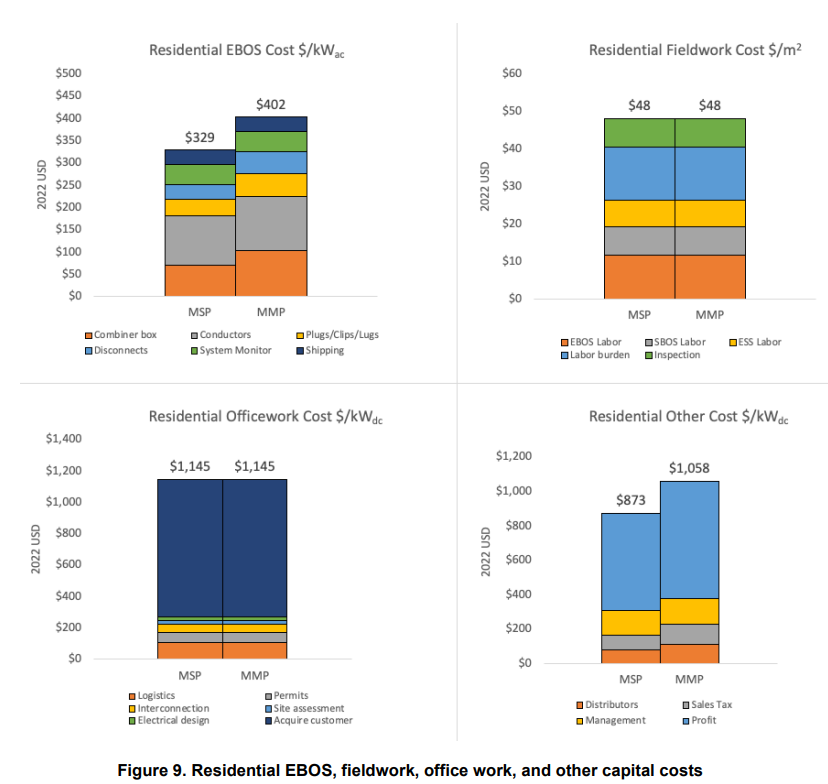 You’ll notice 21 individual items fall into the broad category of soft costs, ranging from shipping costs to inspection labor to customer acquisition.
Fieldwork labor (i.e., installing, configuring, and inspecting a solar and battery system) makes up just 7% of the overall system cost, while office work makes up 26% of the total project cost -- the biggest chunk by a substantial margin.
Related reading: How Do I Estimate Solar Installation Costs?
The "other" category of soft costs is made up of sales tax, management salaries, distribution costs, and the dirty word: Profit.
According to the NREL, the average gross profit margin for residential solar projects is just over 20%. As a customer, that can be tough to swallow... until you compare it to other industries.
Most notably, regulated electric utilities -- where most people currently buy electricity -- have an average gross profit margin just north of 36%.
Profit is just part of participating in a capitalist society. In terms of buying electricity, you'll spend a lower share of your money on profit by owning a solar system than by buying individual kilowatt-hours from a utility.
You’ll notice 21 individual items fall into the broad category of soft costs, ranging from shipping costs to inspection labor to customer acquisition.
Fieldwork labor (i.e., installing, configuring, and inspecting a solar and battery system) makes up just 7% of the overall system cost, while office work makes up 26% of the total project cost -- the biggest chunk by a substantial margin.
Related reading: How Do I Estimate Solar Installation Costs?
The "other" category of soft costs is made up of sales tax, management salaries, distribution costs, and the dirty word: Profit.
According to the NREL, the average gross profit margin for residential solar projects is just over 20%. As a customer, that can be tough to swallow... until you compare it to other industries.
Most notably, regulated electric utilities -- where most people currently buy electricity -- have an average gross profit margin just north of 36%.
Profit is just part of participating in a capitalist society. In terms of buying electricity, you'll spend a lower share of your money on profit by owning a solar system than by buying individual kilowatt-hours from a utility.
- Current industry average cost = between $3 to $4 per watt
- Average size solar panel system = around 7 kilowatts (a kilowatt is 1000 watts)
- $3.5 (per watt) x 7,000 (watts) = $24,500 per system (before the 30% ITC tax credit)
Let’s take a closer look at the breakdown of hard costs vs. soft costs associated with installing residential solar panels.
What are the hard costs of home solar?
Think of hard costs in terms of hardware: the physical products installed to get your new solar panel system up and running. This is what you’ll pay for the solar panels themselves, inverters, solar mounting racks, a battery for storage, etc. In 2010, hard costs made up around two-thirds of the total cost of a home solar project. Based on the latest data from NREL, that figure is closer to 45% today. Heading into 2026, solar panels often account for about 13% of the total project cost, while inverters and balance of system (BOS) equipment account for 33% of the total cost of an average project.
The majority of the project cost goes toward soft costs, including labor, permitting, overhead, and profit, which we'll explore below.
What are the soft costs of home solar?
Soft costs include administration costs for the company, customer acquisition and marketing, system design, permits and fees for connecting to the grid, and labor for installation. Here’s the NREL's latest soft costs breakdown of a solar and battery project:
You’ll notice 21 individual items fall into the broad category of soft costs, ranging from shipping costs to inspection labor to customer acquisition.
Fieldwork labor (i.e., installing, configuring, and inspecting a solar and battery system) makes up just 7% of the overall system cost, while office work makes up 26% of the total project cost -- the biggest chunk by a substantial margin.
Related reading: How Do I Estimate Solar Installation Costs?
The "other" category of soft costs is made up of sales tax, management salaries, distribution costs, and the dirty word: Profit.
According to the NREL, the average gross profit margin for residential solar projects is just over 20%. As a customer, that can be tough to swallow... until you compare it to other industries.
Most notably, regulated electric utilities -- where most people currently buy electricity -- have an average gross profit margin just north of 36%.
Profit is just part of participating in a capitalist society. In terms of buying electricity, you'll spend a lower share of your money on profit by owning a solar system than by buying individual kilowatt-hours from a utility.
How to reduce the soft costs of home solar
A vast majority of that office work cost -- around $1,000 per kW of capacity installed -- comes from customer acquisition, which encompasses all the sales and marketing efforts it takes to attract customers. As the biggest chunk of the project, this is also the biggest opportunity to reduce the cost of going solar -- and that's exactly what we're doing on solar.com. On the solar.com marketplace, installers and homeowners to bypass the marketing and sales game and focus solely on creating the ideal home energy system. This allows our installation partners to lower their prices and focus on what they do best, and allows homeowners like you to confidently compare solar quotes with the expertise of an Energy Advisor -- not the pressure of a salesperson. * *Ready to see your numbers?
See your real solar price in 90 seconds
Enter your address — we'll show you the system, savings, and price for your exact roof.
Get to know solar installation costs
At Solar.com, we’re connecting solar customers with valuable information and vetted solar companies. Connect with an Energy Advisor to design a custom system and find out exactly how much you can lower your essential electricity costs.More in Solar Panel Installation Cost
Making Sense of Solar Project Pricing in 2025
Sam Wigness·
How Do I Estimate Solar Installation Costs?
Sam Wigness·
SmartFlower Solar Review: The True Cost of a Solar Flower
Isaac Ost·
How to Find High Quality Solar Quotes in 2021
Isaac Ost·
Solar Panels and Homeowners Insurance – What’s Covered?
Stephanie Hauschildt·
How to Get Fast Quotes on Solar for Your Home
Isaac Ost·
Will the Solar Trade War Impact Home Solar?
Hannah Glenn·
Sell-Out Solar Workshops Highlight Top 5 Insights Before Going Solar
Sam Wigness·
Get the Solar Energy Facts – What Are You Really Paying For?
Sam Wigness·
Your next step
See exactly what solar costs on your roof
We use satellite data and your utility rates to show your price and payback in about 90 seconds, with no sales calls.